[{"id":"html","name":"Html","className":"HtmlPlugin","icon":"fas fa-code","hash":["zmlsh7z3unf"],"parent":null,"type":"draggable","classType":"section-htmlPlugin","value":"<!DOCTYPE html>\n<html lang=\"en\">\n<head>\n<meta charset=\"UTF-8\">\n<meta name=\"viewport\" content=\"width=device-width, initial-scale=1.0\">\n<title>Blog - InModerna GSI</title>\n\n<style>\nbody{\n margin:0;\n font-family:'Segoe UI', sans-serif;\n background:#f5f7fb;\n color:#1f2937;\n}\n\n/* HERO */\n.hero{\n height:35vh;\n background:url('https://images.unsplash.com/photo-1495020689067-958852a7765e') center/cover;\n display:flex;\n align-items:center;\n justify-content:center;\n position:relative;\n color:white;\n text-align:center;\n}\n\n.hero::after{\n content:'';\n position:absolute;\n inset:0;\n background:rgba(0,0,0,0.55);\n}\n\n.hero h1{\n position:relative;\n font-size:52px;\n letter-spacing:3px;\n z-index:2;\n}\n\n/* LAYOUT */\n.container{\n max-width:1200px;\n margin:50px auto;\n display:flex;\n gap:30px;\n padding:0 20px;\n}\n\n/* POSTS */\n.posts{\n flex:3;\n}\n\n.post{\n background:white;\n border-radius:18px;\n overflow:hidden;\n margin-bottom:30px;\n box-shadow:0 10px 25px rgba(0,0,0,0.05);\n}\n\n.post img{\n width:100%;\n height:260px;\n object-fit:cover;\n}\n\n.post-content{\n padding:25px;\n}\n\n.date{\n font-size:13px;\n color:#6b7280;\n}\n\n.post h2{\n margin:10px 0;\n font-size:24px;\n}\n\n/* READ MORE */\n.read-more{\n margin-top:15px;\n}\n\n.read-more summary{\n display:inline-block;\n background:#1e40af;\n color:white;\n padding:11px 24px;\n border-radius:30px;\n font-size:15px;\n font-weight:600;\n cursor:pointer;\n list-style:none;\n transition:0.3s;\n user-select:none;\n}\n\n.read-more summary::-webkit-details-marker{\n display:none;\n}\n\n.read-more summary::marker{\n display:none;\n}\n\n.read-more summary:hover{\n background:#17358f;\n transform:translateY(-2px);\n}\n\n.read-more[open] summary{\n margin-bottom:20px;\n}\n\n.read-less-label{\n display:none;\n}\n\n.read-more[open] .read-more-label{\n display:none;\n}\n\n.read-more[open] .read-less-label{\n display:inline;\n}\n\n.full-post-content{\n line-height:1.6;\n}\n\n/* SIDEBAR */\n.sidebar{\n flex:1;\n}\n\n.widget{\n background:white;\n padding:20px;\n border-radius:18px;\n box-shadow:0 10px 25px rgba(0,0,0,0.05);\n margin-bottom:20px;\n}\n\n.widget h3{\n margin-bottom:10px;\n}\n\n/* RESPONSIVE */\n@media(max-width:900px){\n .container{\n flex-direction:column;\n }\n\n .hero h1{\n font-size:40px;\n }\n\n .post img{\n height:220px;\n }\n}\n</style>\n</head>\n\n<body>\n\n<!-- HERO -->\n<div class=\"hero\">\n <h1>BLOG</h1>\n</div>\n\n<div class=\"container\">\n\n <!-- POSTS -->\n <div class=\"posts\">\n\n <!-- API BAIX LLOBREGAT MEETING -->\n <div class=\"post\">\n\n <img src=\"https://www.inmoderna.es/images/foto%204%20api.JPG\"\n alt=\"API Baix Llobregat meeting in Castelldefels with institutional representatives and real estate professionals\"\n style=\"width:100%; height:260px; object-fit:cover; object-position:center 80%;\">\n\n <div class=\"post-content\">\n\n <div class=\"date\">October 9, 2026</div>\n\n <h2>INMODERNA GSI TAKES PART IN THE API BAIX LLOBREGAT MEETING: HOUSING, REGULATION AND THE CHALLENGES OF INCREASING SUPPLY</h2>\n\n <p>\n On <b>October 6, 2026</b>, InModerna GSI took part in the <b>API Baix Llobregat Meeting</b>, held in Castelldefels, a professional event dedicated to analysing some of the main challenges currently affecting the housing market.<br><br>\n\n The meeting brought together real estate professionals, experts and representatives of public administrations to discuss the shortage of supply, growing demand, protected housing, regulation and the existing difficulties in increasing the residential housing stock.\n </p>\n\n <details class=\"read-more\">\n\n <summary>\n <span class=\"read-more-label\">Read more</span>\n <span class=\"read-less-label\">Read less</span>\n </summary>\n\n <div class=\"full-post-content\">\n\n <p>\n For <b>InModerna GSI</b>, taking part in this type of meeting is part of our commitment to staying informed, gaining first-hand knowledge of the changes affecting the sector and listening to experts, public administrations and professionals who work every day with the reality of housing.<br><br>\n\n <b>The municipal perspective</b><br><br>\n\n One of the highlights of the event was the panel dedicated to the <b>challenges of local housing policies</b>, with the participation of <b>Joan Basagañas i Camps, Mayor of Sant Just Desvern</b>, and <b>Eduard Sanz García, Mayor of Esplugues de Llobregat</b>.<br><br>\n\n Their participation brought the municipal perspective into the debate: how to generate more housing, how to manage available land, what difficulties local councils face and what role local administrations can play in creating affordable and protected housing.<br><br>\n\n One of the ideas present throughout the event was the need to strengthen <b>collaboration between the public and private sectors</b>. Generating new housing requires planning, land, financing, legal certainty and projects that are economically viable.<br><br>\n\n <b>Why are we talking about a housing shortage?</b><br><br>\n\n The data presented by <b>Joana Crespo García</b>, Director of the API Centre for Studies and Research, helps to explain the current imbalance very clearly.<br><br>\n\n In Catalonia, around <b>45,000 new households</b> were estimated in 2025, while <b>16,364 homes</b> were completed. This does not mean that every new household automatically needs a newly built home, but it does show that residential needs are growing at a much faster pace than housing production.<br><br>\n\n The same analysis identifies an <b>imbalance between supply and demand</b>, linked to the housing deficit and the limited number of available social and affordable homes.<br><br>\n\n In addition, the projections presented indicate that <b>67% of the increase in households in Catalonia will be concentrated in the province of Barcelona</b>, reinforcing residential pressure especially in the metropolitan area.<br><br>\n\n The composition of households is also changing. Homes occupied by one or two people are becoming increasingly common, which means that the same population volume may require a higher number of homes.<br><br>\n\n <b>More homes are being built than a few years ago, but still far from previous levels</b><br><br>\n\n Housing production data shows a recovery in recent years, but we remain well below the levels seen before the financial crisis.<br><br>\n\n In Catalonia, <b>71,007 homes were completed in 2008</b>, while in 2025 <b>16,562</b> were completed. In the province of Barcelona, the figure fell from 37,788 homes completed in 2008 to 12,573 in 2025.<br><br>\n\n This difference helps to explain why the current deficit cannot be corrected immediately: it is an imbalance that has accumulated over many years.<br><br>\n\n <b>Protected housing: very high demand</b><br><br>\n\n Protected housing also played an important role during the event. In 2025, there were <b>129,184 people registered in Catalonia in the Register of Applicants for Officially Protected Housing</b>. Of these, 113,916 corresponded to the province of Barcelona.<br><br>\n\n This means that approximately <b>88.2% of registered applicants in Catalonia want to live in a municipality in the province of Barcelona</b>.<br><br>\n\n Barcelonès concentrates the highest demand for protected housing, followed by Baix Llobregat and Vallès Occidental.<br><br>\n\n These figures show that the problem is not only a matter of prices. There is also a <b>lack of available supply in the areas where a significant part of residential demand is concentrated</b>.<br><br>\n\n <b>The cost and feasibility of building</b><br><br>\n\n The meeting also addressed an essential issue: building housing does not depend only on having available land.<br><br>\n\n In recent years, rising construction costs and the tensions affecting materials and supplies after the pandemic have made certain projects more difficult to carry out. In the case of protected housing, the difference between real construction costs and the applicable economic modules has, during certain periods, made it harder to develop new projects.<br><br>\n\n Added to this are urban planning, administrative and financing issues. The presentation also highlighted that urban planning can act as a <b>bottleneck</b> when it does not adapt quickly enough to the evolution of residential needs.<br><br>\n\n For this reason, collaboration between administrations and the private sector can play an important role in promoting viable projects and increasing the stock of affordable and protected housing.<br><br>\n\n <b>Regulation and legal certainty</b><br><br>\n\n Another section of the event was dedicated to regulatory changes affecting the real estate sector.<br><br>\n\n <b>Montserrat Junyent</b>, President of the Association of Real Estate Agents of Barcelona and of the Association of Real Estate Agents of Catalonia, and <b>Joan Ramon Manso</b>, Director of Legal Services, analysed the evolution of regulation and its consequences for the profession and for real estate transactions.<br><br>\n\n In a context of frequent regulatory changes, having up-to-date information is especially important, both for professionals and for owners, buyers and tenants.<br><br>\n\n <b>The economic perspective of Gonzalo Bernardos</b><br><br>\n\n The event also included a lecture by <b>Gonzalo Bernardos</b>, Professor of Economics at the University of Barcelona and specialist in real estate economics, who analysed the market situation and possible future scenarios.<br><br>\n\n His contribution completed a meeting that combined data, regulation, local policies, protected housing and economic analysis.<br><br>\n\n <b>Taking part in order to advise better</b><br><br>\n\n For InModerna GSI, attending and participating in these types of meetings goes far beyond institutional presence.<br><br>\n\n Understanding the data, listening to public representatives, legal professionals and economists, and sharing experiences with other real estate agents helps us better understand the reality of the market and the needs of our clients.<br><br>\n\n The housing challenge is complex and has no single solution. It requires <b>more supply, viable protected housing, appropriate planning, financing and collaboration among the different players in the market</b>.<br><br>\n\n At <b>InModerna GSI</b>, we will continue to take part in spaces for debate, training and analysis in order to offer our clients advice that is increasingly informed and adapted to the reality of the market.<br><br>\n\n <a href=\"https://www.apiaic.com/\" target=\"_blank\" rel=\"noopener\">More information about API Catalonia</a>\n </p>\n\n </div>\n\n </details>\n\n </div>\n </div>\n\n <!-- WHAT TO REVIEW BEFORE BUYING A HOME -->\n <div class=\"post\">\n\n <img src=\"https://images.unsplash.com/photo-1564013799919-ab600027ffc6?q=80&w=1600&auto=format&fit=crop\"\n alt=\"Residential home related to the purchase of a property\">\n\n <div class=\"post-content\">\n\n <div class=\"date\">September 30, 2026</div>\n\n <h2>WHAT INFORMATION SHOULD BE REVIEWED BEFORE BUYING A HOME?</h2>\n\n <p>\n Buying a home is one of the most important financial and personal decisions we can make. Location, layout, natural light or the feeling a property gives during a viewing are important aspects, but they should not be the only ones we take into account.<br><br>\n\n Before signing a transaction, it is advisable to review the property's documentation, its land registry status, the condition of the building and certain aspects that may affect both the use of the home and future expenses.\n </p>\n\n <details class=\"read-more\">\n\n <summary>\n <span class=\"read-more-label\">Read more</span>\n <span class=\"read-less-label\">Read less</span>\n </summary>\n\n <div class=\"full-post-content\">\n\n <p>\n A good purchasing decision begins long before arriving at the notary's office. Properly analysing the property allows us to better understand what we are buying and reduce the risk of later encountering expenses, limitations or situations that we had not anticipated.<br><br>\n\n <b>1. The property's land registry status</b><br><br>\n\n One of the first aspects to check is who appears as the owner of the property and whether there are any registered charges affecting it.<br><br>\n\n Situations that may appear include mortgages, seizures, easements, usufructs or other limitations that may affect ownership.<br><br>\n\n The land registry extract provides relevant information about the ownership and certain registered charges affecting the property.<br><br>\n\n This does not necessarily mean that a property with a mortgage cannot be sold. It is a common situation. The most important thing is to understand the situation and establish correctly how it will be cancelled or managed within the transaction.<br><br>\n\n <b>2. The property's documentation</b><br><br>\n\n In addition to land registry information, it is advisable to check that the home has the documentation required for the transaction.<br><br>\n\n Depending on the property and the applicable regulations, documents such as the following may be relevant:<br><br>\n\n 1) The certificate of occupancy.<br>\n 2) The energy performance certificate.<br>\n 3) The cadastral reference.<br>\n 4) The land registry details of the property.<br>\n 5) Certain technical documentation for the building, where applicable.<br><br>\n\n Reviewing these documents before moving forward helps to avoid issues when the transaction is already at a more advanced stage.<br><br>\n\n <b>3. The homeowners' association</b><br><br>\n\n When we buy an apartment, we do not only acquire the interior space of the home. We also become part of a homeowners' association and of a building with its own expenses, maintenance and collective decisions.<br><br>\n\n For this reason, it is advisable to know issues such as:<br><br>\n\n 1) The amount of the regular community fees.<br>\n 2) Whether there are approved or expected extraordinary contributions.<br>\n 3) The general condition of the building.<br>\n 4) Recently completed works.<br>\n 5) Works that may be pending.<br>\n 6) The general financial situation of the community.<br><br>\n\n A home may be in good condition inside and yet form part of a building that will soon require major work on the façade, roof, lift, installations or other communal elements.<br><br>\n\n <b>4. The real condition of the home</b><br><br>\n\n The photographs in a listing provide a first impression, but during a visit it is advisable to analyse the home in more detail.<br><br>\n\n It is advisable to observe the condition of the installations, windows, possible damp, ventilation, insulation, layout, electrical system, plumbing and general conservation.<br><br>\n\n In older homes, it can also be useful to know what renovations have been carried out and whether certain elements correspond to the property's original configuration.<br><br>\n\n Not all defects have the same importance. Painting a wall does not have the same impact as renewing a complete electrical installation or solving a structural or damp problem.<br><br>\n\n <b>5. The building also matters</b><br><br>\n\n Especially in cities such as Barcelona, where the residential stock includes buildings from very different periods, understanding the building is essential.<br><br>\n\n The age of the building, the condition of the communal areas, the existence of a lift, the maintenance carried out and any inspections or pending works may influence both the daily use of the home and future expenses.<br><br>\n\n A home should always be analysed together with the building of which it forms part.<br><br>\n\n <b>6. The property's surroundings</b><br><br>\n\n The surroundings are also part of the purchase.<br><br>\n\n Before making a decision, it can be useful to visit the area at different times of the day and assess aspects such as noise, mobility, public transport, shops, services, the orientation of the property or the day-to-day functioning of the street.<br><br>\n\n The same neighbourhood can change significantly from one street to another, and even between different sections of the same street.<br><br>\n\n That is why understanding the real surroundings is especially important when the buyer does not know the area well.<br><br>\n\n <b>7. The costs associated with the purchase</b><br><br>\n\n The advertised price of a home does not represent the total cost of the transaction.<br><br>\n\n In addition to the purchase price, the buyer must take into account the corresponding taxes, notary and land registry fees, financing if there is a mortgage, and other possible costs related to the transaction.<br><br>\n\n Preparing a complete budget in advance makes it possible to know the total amount required and avoids making decisions based solely on the price of the property.<br><br>\n\n <b>8. Do not rely only on the first impression</b><br><br>\n\n It is normal for a home to create an immediate impression. Natural light, a terrace, a patio, views or a particular layout may make us quickly connect with the property.<br><br>\n\n That feeling is important because a home must also appeal to us, but the final decision should combine two dimensions: the emotional side and the technical side.<br><br>\n\n A good purchase is not only about finding an attractive home. It is also about correctly understanding what we are buying.<br><br>\n\n <b>Before signing, it is advisable to ask questions</b><br><br>\n\n Many doubts can arise during a real estate transaction. Asking before signing is always preferable to later discovering a situation that could have been clarified from the beginning.<br><br>\n\n Documentation, homeowners' association, condition of the building, charges, renovations, expenses and characteristics of the surroundings are some of the issues that should be clear.<br><br>\n\n At <b>InModerna GSI</b>, we support buyers and owners throughout the different stages of a real estate transaction, helping to analyse the property and the necessary documentation in order to make decisions with greater confidence.<br><br>\n\n <b>Buying a home is an important decision. Having clear information before signing allows you to make it with greater confidence and avoid unpleasant surprises later.</b>\n </p>\n\n </div>\n\n </details>\n\n </div>\n </div>\n\n <!-- CENTURY-OLD BUILDINGS IN BARCELONA -->\n <div class=\"post\">\n\n <img src=\"https://commons.wikimedia.org/wiki/Special:Redirect/file/Casa_Fuster.jpg\"\n alt=\"Casa Fuster, a modernist building located between Passeig de Gràcia and Gran de Gràcia, Barcelona\">\n\n <div class=\"post-content\">\n\n <div class=\"date\">September 16, 2026</div>\n\n <h2>THE STORIES HIDDEN BEHIND BARCELONA'S CENTURY-OLD BUILDINGS</h2>\n\n <p>\n Barcelona can also be understood through its buildings. Behind many façades that form part of the everyday landscape of neighbourhoods such as Gràcia, there are more than one hundred years of history, transformations and different ways of living in the city.<br><br>\n\n High ceilings, balconies, interior courtyards, wooden carpentry, hydraulic tile floors and traditional structures are some of the elements that can still be found in many old homes in Barcelona.\n </p>\n\n <details class=\"read-more\">\n\n <summary>\n <span class=\"read-more-label\">Read more</span>\n <span class=\"read-less-label\">Read less</span>\n </summary>\n\n <div class=\"full-post-content\">\n\n <p>\n These buildings are not all the same and do not belong to a single period. Barcelona's growth during the nineteenth century and the first decades of the twentieth century left behind a great diversity of residential buildings, from simple constructions linked to the former municipalities of the Barcelona plain to bourgeois estates and modernist buildings.<br><br>\n\n The Barcelona History Museum explains that, after the 1888 Exhibition, housing construction intensified and different residential typologies coexisted. In former municipalities such as Gràcia, simpler houses were also developed, many with one or two floors, while the city continued to transform.\n (<a href=\"https://www.barcelona.cat/museuhistoria/sites/default/files/parkguell.pdf\" target=\"_blank\">Source: Barcelona History Museum</a>)<br><br>\n\n <b>High ceilings and spaces that speak of another era</b><br><br>\n\n One of the features that most attracts attention when entering certain old homes is the height of the ceilings. This proportion completely changes the perception of space and makes it possible to find elements that are highly valued today, such as mouldings, exposed beams or traditional construction solutions.<br><br>\n\n Over the decades, many homes have been redistributed to adapt to new needs, but some still retain part of that original configuration.<br><br>\n\n <b>The Catalan vault: a technique that remains part of Barcelona</b><br><br>\n\n The Catalan vault, traditionally built with layers of thin brick, forms part of the construction heritage of numerous buildings in the city. In some current renovations it is recovered and left exposed, becoming one of the most characterful elements of the home.<br><br>\n\n <b>Balconies, galleries and interior courtyards</b><br><br>\n\n Before talking about air conditioning or large glass enclosures, architecture already had to solve essential issues such as lighting and ventilation.<br><br>\n\n Street-facing balconies, rear galleries and interior courtyards helped bring light and air into homes that, in many cases, had deep floor plans and layouts very different from those of today.<br><br>\n\n Today these spaces continue to play an important role in the experience of living in an old home.<br><br>\n\n <b>Hydraulic flooring: from everyday element to feature with character</b><br><br>\n\n Many hydraulic tile floors that are now considered a distinctive decorative element began as a common solution in homes from the late nineteenth and early twentieth centuries.<br><br>\n\n Their geometric patterns and colour combinations mean that, when they are preserved in good condition, they can become one of the most recognisable elements of a Barcelona home.<br><br>\n\n <b>Gràcia: visible history on every street</b><br><br>\n\n In Gràcia this diversity is especially easy to perceive. Buildings from different periods coexist with simple estates, houses with patios, modernist constructions and homes that have gone through several generations of renovations.<br><br>\n\n One notable example is Casa Fuster, located on the border between Passeig de Gràcia and Gran de Gràcia. The building, designed by Lluís Domènech i Montaner, was built between 1908 and 1911 and forms part of the city's architectural heritage.<br><br>\n\n But Gràcia's value is not found only in its monumental buildings. It is also found in the anonymous buildings that shape its streets and preserve small pieces of the neighbourhood's everyday history.<br><br>\n\n <b>Renovating without erasing history</b><br><br>\n\n An old home may need updated installations, improved insulation, a modified layout or a kitchen and bathrooms adapted to today's needs.<br><br>\n\n Renovating, however, does not necessarily mean removing everything that existed before. When the condition of the property allows it, preserving certain original elements can help maintain its personality while combining it with contemporary comfort.<br><br>\n\n Each home requires a different analysis. There are elements worth recovering and others that, for technical, functional or safety reasons, must be renewed.<br><br>\n\n <b>Understanding the building also means understanding the home</b><br><br>\n\n When we visit an apartment, we usually first notice the surface area, layout, natural light or rooms. But in a city like Barcelona, it is also important to understand the building of which it forms part.<br><br>\n\n Its age, state of conservation, communal areas, interventions carried out and construction features help to better understand the property.<br><br>\n\n At <b>InModerna GSI</b>, we work every day with homes and buildings in Gràcia and Barcelona. Knowing their features, surroundings and the reality of each building allows us to advise owners and buyers with a vision that goes beyond square metres.<br><br>\n\n <b>Because behind every home there is a building, and behind many buildings in Barcelona there is more than a century of history.</b>\n </p>\n\n </div>\n\n </details>\n\n <p style=\"font-size:11px; color:#9ca3af; margin-top:20px; line-height:1.5;\">\n Photo:\n <a href=\"https://commons.wikimedia.org/wiki/File:Casa_Fuster.jpg\"\n target=\"_blank\"\n rel=\"noopener\"\n style=\"color:#6b7280; text-decoration:none;\">\n Carles Paredes / Wikimedia Commons\n </a>\n ·\n <a href=\"https://creativecommons.org/licenses/by-sa/3.0/\"\n target=\"_blank\"\n rel=\"noopener\"\n style=\"color:#6b7280; text-decoration:none;\">\n CC BY-SA 3.0\n </a>\n · Photo cropped for web adaptation.\n </p>\n\n </div>\n </div>\n\n <!-- GRÀCIA FESTIVAL -->\n <div class=\"post\">\n\n <img src=\"https://commons.wikimedia.org/wiki/Special:Redirect/file/Festa_Major_de_Gr%C3%A0cia_2026_-_20260820_203425.jpg\"\n alt=\"Festa Major de Gràcia 2026, Barcelona\">\n\n <div class=\"post-content\">\n\n <div class=\"date\">September 3, 2026</div>\n\n <h2>GRÀCIA, FESTA MAJOR AND THE END OF SUMMER: THE NEIGHBOURHOOD THAT ALWAYS COMES BACK TOGETHER</h2>\n\n <p>\n There are moments of the year that explain a neighbourhood better than any guidebook.<br><br>\n\n In Gràcia, one of those moments arrives every August, when the streets stop being just streets, the squares fill with conversations and the neighbourhood is transformed with colours, music, lights and decorations that have taken shape over months thanks to the work of neighbours.<br><br>\n\n The Festa Major de Gràcia is not simply a celebration. It is also a way of remembering what makes this neighbourhood special.\n </p>\n\n <details class=\"read-more\">\n\n <summary>\n <span class=\"read-more-label\">Read more</span>\n <span class=\"read-less-label\">Read less</span>\n </summary>\n\n <div class=\"full-post-content\">\n\n <p>\n For a few days, Gràcia once again shows one of its most recognisable sides: decorated streets, popular activities, concerts, dinners, traditional culture and a street life that is difficult to find with the same intensity elsewhere in Barcelona.<br><br>\n\n But behind these festive days there is much more: associations, street committees, volunteers and neighbours working for months so that, once again, the neighbourhood can be transformed.<br><br>\n\n <b>A neighbourhood built by its neighbours</b><br><br>\n\n Perhaps this is one of the things that best defines Gràcia.<br><br>\n\n Although it is part of a large city like Barcelona, the neighbourhood preserves a very distinct identity. Its squares, local shops, organisations, markets, narrow streets and everyday relationships between people keep alive that neighbourhood feeling that many cities have gradually lost.<br><br>\n\n During the Festa Major, this identity becomes even more visible.<br><br>\n\n The decorations do not appear overnight. They are the result of months of meetings, ideas, manual work and collaboration. Each street tells a small story and each decoration reflects, in some way, the collective effort of the people who live there.<br><br>\n\n And perhaps that is the most beautiful part of the festival: seeing how a space we normally use to go to work, buy bread or return home becomes, for a few days, a shared place.<br><br>\n\n <b>When summer begins to say goodbye</b><br><br>\n\n The Festa Major de Gràcia also has something of the end of summer about it.<br><br>\n\n It arrives at that point in August when the days are still long, Barcelona is still living at another pace and many people slowly begin to return from their holidays.<br><br>\n\n For a few days, however, it seems as if the calendar stops.<br><br>\n\n Terraces fill up, the streets regain activity and the nights stretch a little longer. It is almost one last celebration before September returns with routines, schedules, new projects and that familiar feeling of beginning a new stage.<br><br>\n\n Perhaps that is why the Festa Major also carries a small touch of nostalgia.<br><br>\n\n It reminds us that summer is ending, but at the same time it brings us back to the neighbourhood, to neighbours, to the usual shops and to that everyday life that is also part of our home.<br><br>\n\n <b>Gràcia is much more than a location</b><br><br>\n\n In the real estate sector we often talk about square metres, orientation, layout, prices or the condition of the building.<br><br>\n\n These are important factors, of course.<br><br>\n\n But there is a part of a home's value that is much harder to express with a number: <b>the place where it is located and the life that surrounds it.</b><br><br>\n\n Living in Gràcia means going down to shop at local businesses, meeting familiar faces in a square, having small restaurants, markets, schools, workshops and shops just a few minutes from home.<br><br>\n\n It means walking through streets that still preserve a human scale and, for one week in August, seeing those same streets change completely.<br><br>\n\n A home is not only what we find behind the front door.<br><br>\n\n It is also the street, the square, the neighbours and the history of the place where we decide to live.<br><br>\n\n <b>InModerna is also part of this neighbourhood</b><br><br>\n\n For us, Gràcia is not only the area where we work.<br><br>\n\n It is the neighbourhood where our office is located, where every day we speak with owners, buyers, tenants, shopkeepers and neighbours. It is where we know the streets, the buildings and many of the stories that exist behind each home.<br><br>\n\n That is why we like our blog not to talk only about prices, regulations or real estate transactions.<br><br>\n\n We also want to talk about the neighbourhood.<br><br>\n\n About those things that explain why so many people want to live here and why many of those who have lived in Gràcia for years continue to feel it as a small town within Barcelona.<br><br>\n\n <b>Until next year</b><br><br>\n\n The decorations have already been removed, the streets have gradually regained their usual appearance and September is here.<br><br>\n\n What remains are the photographs, the conversations, a night or two that went on a little longer than expected and the memory of another Festa Major.<br><br>\n\n And the neighbourhood continues.<br><br>\n\n With its shops opening every morning, shutters going up again, squares filling up, neighbours greeting one another and a new season beginning.<br><br>\n\n From <b>InModerna GSI</b>, we can only say:<br><br>\n\n <b>thank you, Gràcia, for another summer full of life.</b><br><br>\n\n And see you at the next festival.\n </p>\n\n </div>\n\n </details>\n\n <p style=\"font-size:11px; color:#9ca3af; margin-top:20px; line-height:1.5;\">\n Photo:\n <a href=\"https://commons.wikimedia.org/wiki/File:Festa_Major_de_Gr%C3%A0cia_2026_-_20260820_203425.jpg\"\n target=\"_blank\"\n rel=\"noopener\"\n style=\"color:#6b7280; text-decoration:none;\">\n Pere López Brosa / Wikimedia Commons\n </a>\n ·\n <a href=\"https://creativecommons.org/licenses/by-sa/4.0/\"\n target=\"_blank\"\n rel=\"noopener\"\n style=\"color:#6b7280; text-decoration:none;\">\n CC BY-SA 4.0\n </a>\n · Photo cropped for web adaptation.\n </p>\n\n </div>\n </div>\n\n <!-- SEASONAL RENTAL -->\n <div class=\"post\">\n\n <img src=\"https://images.unsplash.com/photo-1454165804606-c3d57bc86b40?q=80&w=1600&auto=format&fit=crop\" alt=\"Professional analysis of contracts, documentation and real estate management\">\n\n <div class=\"post-content\">\n\n <div class=\"date\">July 13, 2026</div>\n\n <h2>SEASONAL RENTALS AND ROOM RENTALS: WHY IS THE MARKET ENTERING A STAGE OF GREATER CONTROL?</h2>\n\n <p>\n The rental market is changing. In recent years, many owners have looked for alternatives to habitual residence rentals: seasonal contracts, room rentals, stays linked to studies, work, professional relocation, medical treatment or other temporary situations.<br><br>\n\n This change has not appeared by chance. Demand pressure, rent caps in stressed areas, regulatory uncertainty and the need for greater flexibility have led many properties to be analysed from a more patrimonial perspective.\n </p>\n\n <details class=\"read-more\">\n\n <summary>\n <span class=\"read-more-label\">Read more</span>\n <span class=\"read-less-label\">Read less</span>\n </summary>\n\n <div class=\"full-post-content\">\n\n <p>\n However, the current context no longer allows improvisation. Seasonal rentals and room rentals have entered a stage of greater control, greater justification and greater documentary requirements. For owners, this means that profitability can no longer be analysed separately from legal risk and the real management of the property.<br><br>\n\n <b>Temporariness does not depend only on duration</b><br><br>\n\n A common mistake is to think that a 6, 9 or 11-month contract is automatically a seasonal rental. But the main issue is not only the duration, but the purpose of the contract.<br><br>\n\n The Urban Leases Act distinguishes between residential leases and leases for uses other than housing.\n (<a href=\"https://www.boe.es/buscar/act.php?id=BOE-A-1994-26003\" target=\"_blank\">Source: BOE - Urban Leases Act</a>)<br><br>\n\n For a rental to truly be seasonal, it must respond to a specific and coherent temporary cause: studies, fixed-term work, professional relocation, medical care, works in the habitual residence or another temporary need.<br><br>\n\n <b>Room rentals also require more analysis</b><br><br>\n\n Room rentals have become a very common form of rental in cities with high residential demand. For some owners, it may seem like a way to obtain more monthly income, but it also involves more management, more turnover, more coexistence between occupants and more attention to regulatory compliance.<br><br>\n\n Law 11/2025, on housing and urban planning measures in Catalonia, strengthens the control framework over different residential uses.\n (<a href=\"https://portaljuridic.gencat.cat/ca/document-del-pjur/?documentId=1033405\" target=\"_blank\">Source: Legal Portal of Catalonia - Law 11/2025</a>)<br><br>\n\n <b>Profitability and risk: two variables that must be analysed together</b><br><br>\n\n When an owner decides to rent out a property, it is normal to ask which option may generate more income. But the professional question should not only be “how much can I charge?”, but also “what risk am I taking on and what level of management will I need?”.<br><br>\n\n Therefore, before deciding, it is advisable to compare scenarios:<br><br>\n\n 1) Estimated monthly income.<br>\n 2) Duration and stability of occupancy.<br>\n 3) Risk of non-payment or turnover.<br>\n 4) Wear and tear of the property.<br>\n 5) Need for management and follow-up.<br>\n 6) Applicable regulations.<br>\n 7) Tenant or occupant profile.<br>\n 8) Owner's patrimonial objective.<br><br>\n\n <b>Documentation becomes a key element</b><br><br>\n\n In a context of greater regulation, documentation is a central element. Before placing a property on the market, it is advisable to review the property's situation, the certificate of occupancy if applicable, the energy certificate, the condition of the building, the contract terms and the justification for the type of lease.<br><br>\n\n <b>What strategy may make sense for an owner?</b><br><br>\n\n There is no single answer. The decision depends on the type of property, its location, the condition of the apartment, the owner's personal situation and their patrimonial objective.<br><br>\n\n <b>Conclusion</b><br><br>\n\n Seasonal rentals and room rentals are part of today's market, but they can no longer be approached as an improvised solution. The new context requires more judgement, more documentation and a more professional view of each transaction.<br><br>\n\n At InModerna GSI we help owners study their property from a real estate and patrimonial perspective, assessing the different options: habitual residence rental, seasonal rental, room rental, sale, renovation or preservation of the asset.<br><br>\n\n <b>If you own an apartment in Barcelona and want to analyse which strategy may best fit your situation, contact InModerna GSI and we will advise you with no obligation.</b>\n </p>\n\n </div>\n\n </details>\n\n </div>\n </div>\n\n <!-- ENERGY EFFICIENCY -->\n <div class=\"post\">\n\n <img src=\"https://images.unsplash.com/photo-1600585154340-be6161a56a0c?q=80&w=1600&auto=format&fit=crop\" alt=\"Bright and efficient home prepared for sale or rent\">\n\n <div class=\"post-content\">\n\n <div class=\"date\">July 6, 2026</div>\n\n <h2>ENERGY EFFICIENCY AND RENOVATIONS: WHY ARE THEY BECOMING INCREASINGLY IMPORTANT WHEN SELLING OR RENTING A HOME?</h2>\n\n <p>\n When an owner thinks about selling or renting a home, the first thing they often consider is the price. But the value of a property does not depend only on square metres, location or the state of the market.<br><br>\n\n Other factors are becoming increasingly important, such as the state of conservation, natural light, insulation, layout, comfort, energy consumption and the first impression a person receives when visiting the home.\n </p>\n\n <details class=\"read-more\">\n\n <summary>\n <span class=\"read-more-label\">Read more</span>\n <span class=\"read-less-label\">Read less</span>\n </summary>\n\n <div class=\"full-post-content\">\n\n <p>\n In an increasingly demanding real estate market, properly preparing an apartment before selling or renting it can make the difference.<br><br>\n\n <b>Why is energy efficiency becoming more important?</b><br><br>\n\n The European Union has strengthened policies linked to the energy efficiency of buildings in recent years.\n (<a href=\"https://www.miteco.gob.es/es/energia/eficiencia/epbd2024.html\" target=\"_blank\">Source: MITECO</a>)<br><br>\n\n Aspects such as insulation, windows, climate control, ventilation and energy consumption will carry increasing weight in the perceived value of a home.<br><br>\n\n <b>The energy certificate: more than just a document</b><br><br>\n\n The energy performance certificate is mandatory in many sale or rental transactions.\n (<a href=\"https://www.miteco.gob.es/es/energia/eficiencia/certificacion-energetica.html\" target=\"_blank\">Source: MITECO - Energy certification</a>)<br><br>\n\n A better energy rating can convey an idea of lower consumption, greater comfort and better maintenance of the home.<br><br>\n\n <b>What do buyers and tenants look at today?</b><br><br>\n\n 1) Natural light.<br>\n 2) The orientation of the home.<br>\n 3) The condition of the kitchen and bathroom.<br>\n 4) The quality of the windows.<br>\n 5) Thermal and acoustic insulation.<br>\n 6) The layout of the spaces.<br>\n 7) The condition of the building and communal areas.<br>\n 8) Whether immediate renovations are needed.<br><br>\n\n <b>Renovating before selling: is it always necessary?</b><br><br>\n\n Not always. Some owners think that a major renovation is necessary before selling, but it does not always pay off to invest a large amount if it is not recovered in the final price.<br><br>\n\n In some cases, painting, organising, improving lighting, repairing visible defects or better preparing the home for photographs and viewings may be enough.<br><br>\n\n <b>Grants and rehabilitation</b><br><br>\n\n The State Housing Plan 2026-2030 includes lines focused on rehabilitation, accessibility and improving energy efficiency.\n (<a href=\"https://www.mivau.gob.es/vivienda/info-plan-estatal-de-vivienda-2026-2030\" target=\"_blank\">Source: Ministry of Housing and Urban Agenda</a>)<br><br>\n\n <b>How can InModerna GSI help?</b><br><br>\n\n At InModerna GSI we understand that each home needs a different strategy. We can advise on whether it is better to sell as it is, make small improvements, study a partial renovation or prepare a visual proposal to show the property's potential.<br><br>\n\n <b>Contact InModerna GSI and we will advise you with no obligation.</b>\n </p>\n\n </div>\n\n </details>\n\n </div>\n </div>\n\n <!-- CHANGES IN RENTAL REGULATIONS -->\n <div class=\"post\">\n\n <img src=\"https://images.unsplash.com/photo-1450101499163-c8848c66ca85?q=80&w=1600&auto=format&fit=crop\" alt=\"Rental contract and legal documents related to changes in the Urban Leases Act\">\n\n <div class=\"post-content\">\n\n <div class=\"date\">July 1, 2026</div>\n\n <h2>THE GOVERNMENT IS PREPARING NEW CHANGES TO RENTAL REGULATIONS: WHAT COULD HAPPEN TO THE URBAN LEASES ACT?</h2>\n\n <p>\n The rental market is once again at the centre of political and legal debate. After months of regulatory uncertainty, the Government has announced the preparation of a new package of housing measures.<br><br>\n\n For owners and tenants, this situation raises a very clear question: <b>what could actually change and how could it affect rental contracts?</b>\n </p>\n\n <details class=\"read-more\">\n\n <summary>\n <span class=\"read-more-label\">Read more</span>\n <span class=\"read-less-label\">Read less</span>\n </summary>\n\n <div class=\"full-post-content\">\n\n <p>\n Before going into detail, it is important to clarify that not all the announced measures have been definitively approved.<br><br>\n\n <b>What does the Urban Leases Act currently regulate?</b><br><br>\n\n The Urban Leases Act is the main law regulating leases of urban properties.\n (<a href=\"https://www.boe.es/buscar/act.php?id=BOE-A-1994-26003\" target=\"_blank\">Source: BOE - Urban Leases Act</a>)<br><br>\n\n <b>What happened with the March 2026 decree?</b><br><br>\n\n The Government approved Royal Decree-Law 8/2026, of March 20.\n (<a href=\"https://www.boe.es/buscar/act.php?id=BOE-A-2026-6545\" target=\"_blank\">Source: BOE</a>)<br><br>\n\n This decree was not ratified by Congress and was repealed.\n (<a href=\"https://www.boe.es/diario_boe/txt.php?id=BOE-A-2026-9359\" target=\"_blank\">Source: BOE - repeal</a>)<br><br>\n\n <b>What is the Government preparing now?</b><br><br>\n\n Among the announced measures are possible changes regarding extensions, rent updates, seasonal contracts, room rentals and documentary obligations.<br><br>\n\n <b>Why is this important for owners?</b><br><br>\n\n Any change in regulations may affect the way a home is managed. Before renting out an apartment, it is advisable to be clear about what type of contract truly fits the transaction.<br><br>\n\n <b>What do we recommend at InModerna GSI?</b><br><br>\n\n In this scenario, our main recommendation is to act prudently and not make decisions based only on headlines.<br><br>\n\n <b>Contact InModerna GSI and we will help you study your case.</b>\n </p>\n\n </div>\n\n </details>\n\n </div>\n </div>\n\n <!-- HOUSING PRICES -->\n <div class=\"post\">\n\n <img src=\"https://images.unsplash.com/photo-1583422409516-2895a77efded\" alt=\"Urban view of Barcelona related to the real estate market\">\n\n <div class=\"post-content\">\n\n <div class=\"date\">June 25, 2026</div>\n\n <h2>HOUSING PRICES CONTINUE TO RISE: WHAT DOES THIS MEAN FOR OWNERS IN BARCELONA?</h2>\n\n <p>\n The real estate market continues to show strong activity in Spain, Catalonia and especially Barcelona.<br><br>\n\n At a time when housing prices continue to rise, many owners are asking a very common question: <b>is this a good time to value my apartment?</b>\n </p>\n\n <details class=\"read-more\">\n\n <summary>\n <span class=\"read-more-label\">Read more</span>\n <span class=\"read-less-label\">Read less</span>\n </summary>\n\n <div class=\"full-post-content\">\n\n <p>\n The answer is yes. Not necessarily because you need to sell immediately, but because knowing the real value of a home allows you to make decisions with greater confidence.<br><br>\n\n According to the National Statistics Institute, the Housing Price Index in Spain recorded a year-on-year increase of 12.9% during the first quarter of 2026.\n (<a href=\"https://www.ine.es/dyngs/Prensa/IPV1T26.htm\" target=\"_blank\">Source: INE</a>)<br><br>\n\n In the city of Barcelona, asking-price data published by Idealista placed the average price of homes for sale at €5,243/m² in May 2026.\n (<a href=\"https://www.idealista.com/sala-de-prensa/informes-precio-vivienda/venta/cataluna/barcelona-provincia/barcelona/\" target=\"_blank\">Source: Idealista - Barcelona</a>)<br><br>\n\n In Gràcia, the average asking price stood at €5,643/m².\n (<a href=\"https://www.idealista.com/sala-de-prensa/informes-precio-vivienda/venta/cataluna/barcelona-provincia/barcelona/gracia/\" target=\"_blank\">Source: Idealista - Gràcia</a>)<br><br>\n\n <b>What does this situation mean for an owner?</b><br><br>\n\n Listing a property above its real value can cause the listing to lose strength. Conversely, setting the price too low can mean missing an economic opportunity.<br><br>\n\n <b>An online valuation can provide guidance, but it is not always enough</b><br><br>\n\n The price of an apartment depends on its exact location, condition, light, layout, floor level, lift, building, demand and comparable properties.<br><br>\n\n <b>Gràcia: a neighbourhood where every street matters</b><br><br>\n\n Valuing an apartment in Gràcia requires local knowledge. Two homes of similar size can have very different values depending on their location and characteristics.<br><br>\n\n <b>At InModerna GSI we help you value your home</b><br><br>\n\n If you own an apartment in Gràcia or Barcelona and want to know how much it may be worth, we can advise you with no obligation.<br><br>\n\n <b>Contact InModerna GSI and request a professional valuation of your home.</b>\n </p>\n\n </div>\n\n </details>\n\n </div>\n </div>\n\n <!-- TOURISM-PHOBIA -->\n <div class=\"post\">\n\n <img src=\"https://images.unsplash.com/photo-1486406146926-c627a92ad1ab\" alt=\"\">\n\n <div class=\"post-content\">\n\n <div class=\"date\">November 21, 2020</div>\n\n <h2>FROM TOURISM-PHOBIA TO NOSTALGIA</h2>\n\n <p>\n Covid has changed our lives in an extreme way.<br><br>\n\n They say that from now on everything will be different. Allow me to have my doubts.\n </p>\n\n <details class=\"read-more\">\n\n <summary>\n <span class=\"read-more-label\">Read more</span>\n <span class=\"read-less-label\">Read less</span>\n </summary>\n\n <div class=\"full-post-content\">\n\n <p>\n Now that we are without tourism, we have realised that tourism was truly necessary for the city of Barcelona.\n (<a href=\"https://www.expansion.com/catalunya/2020/10/11/5f834dbb468aeb8c2f8b45bd.html\" target=\"_blank\">link</a>)<br><br>\n\n But, as the saying goes, not too much and not too little. That type of uncontrolled growth, without proper planning of the kind of tourism we wanted, was not good for the city.<br><br>\n\n So, focusing on our sector, real estate, it has been one of the most affected in the city.<br><br>\n\n On the one hand, rentals.<br><br>\n\n 1) Covid.<br>\n 2) The new Generalitat regulation on stressed areas.<br><br>\n\n The wheel will slowly start turning again. The multiplier effect of tourism will begin to bear fruit.<br><br>\n\n <b>Sales:</b> although property transactions have fallen, prices remain relatively stable.<br><br>\n\n In short, the market will gradually recover in the medium term.<br><br>\n\n <b>José Cazorla - InModerna GSI</b>\n </p>\n\n </div>\n\n </details>\n\n </div>\n </div>\n\n <!-- PRICE CONTROL -->\n <div class=\"post\">\n\n <img src=\"https://images.unsplash.com/photo-1560518883-ce09059eeffa\" alt=\"\">\n\n <div class=\"post-content\">\n\n <div class=\"date\">January 12, 2024</div>\n\n <h2>PRICE CONTROL IN CATALONIA COMES INTO FORCE IN FEBRUARY</h2>\n\n <p>\n At InModerna GSI, we would summarise the entry into force of this regulation as follows: the State neglecting its constitutional obligation to provide decent and affordable housing, placing the burden of the problem on small property owners.\n </p>\n\n <details class=\"read-more\">\n\n <summary>\n <span class=\"read-more-label\">Read more</span>\n <span class=\"read-less-label\">Read less</span>\n </summary>\n\n <div class=\"full-post-content\">\n\n <p>\n It is not fair that small savers, who have invested in their future and in a supplement for their retirement, should put their property at risk, exposing it to still uncontrolled inflation, extremely high interest rates and now rent limitation.<br><br>\n\n Those owners who cannot afford it will decide to sell, removing homes from the rental market.<br><br>\n\n International investors will stop investing in Spain due to the lack of legal certainty and profitability.<br><br>\n\n We do not understand why a regulation like this is being applied again for a second time, especially when it has already been shown not to work.<br><br>\n\n If you would like more information, we leave you a link:<br><br>\n\n <a href=\"https://www.idealista.com/news/\" target=\"_blank\">\n Catalonia, the first autonomous community to apply the rent cap — idealista/news\n </a>\n </p>\n\n </div>\n\n </details>\n\n </div>\n </div>\n\n <!-- MORTGAGES -->\n <div class=\"post\">\n\n <img src=\"https://images.unsplash.com/photo-1560184897-ae75f418493e\" alt=\"\">\n\n <div class=\"post-content\">\n\n <div class=\"date\">December 21, 2023</div>\n\n <h2>MORTGAGES BEGIN THE PATH OF SLOW DECLINE</h2>\n\n <p>\n The slow decline in interest rates is finally beginning. The CPI is starting to moderate, close to 3.2% year-on-year in November, with the annual core CPI rate at 4.5%.\n </p>\n\n <details class=\"read-more\">\n\n <summary>\n <span class=\"read-more-label\">Read more</span>\n <span class=\"read-less-label\">Read less</span>\n </summary>\n\n <div class=\"full-post-content\">\n\n <p>\n Growth forecasts for Spain in 2024 are only 1.6%, while Germany is expected to remain at 0.6%.<br><br>\n\n Today, Euribor stands at 3.60%. Just a few weeks ago it was at 4.12%.<br><br>\n\n At InModerna GSI, we believe that if the ECB lowers rates, we will see a sharper fall in interest rates. But we must remember that these are all forecasts.<br><br>\n\n Our recommendation is to negotiate a novation, that is, to renegotiate the terms with your bank. Otherwise, we recommend going to a mortgage broker to study other options.<br><br>\n\n We lean towards the mixed-rate formula: a fixed first year and then variable, seeking to take advantage of a possible subsequent fall in rates.<br><br>\n\n <b>José Cazorla - InModerna GSI</b>\n </p>\n\n </div>\n\n </details>\n\n </div>\n </div>\n\n </div>\n\n <!-- SIDEBAR -->\n <div class=\"sidebar\">\n\n <div class=\"widget\">\n <h3>Recent posts</h3>\n\n <p>INMODERNA GSI TAKES PART IN THE API BAIX LLOBREGAT MEETING</p>\n\n <p>WHAT INFORMATION SHOULD BE REVIEWED BEFORE BUYING A HOME?</p>\n\n <p>THE STORIES HIDDEN BEHIND BARCELONA'S CENTURY-OLD BUILDINGS</p>\n\n <p>GRÀCIA, FESTA MAJOR AND THE END OF SUMMER</p>\n\n <p>SEASONAL RENTALS AND ROOM RENTALS</p>\n\n <p>ENERGY EFFICIENCY AND RENOVATIONS</p>\n\n <p>THE GOVERNMENT IS PREPARING NEW CHANGES TO RENTAL REGULATIONS</p>\n\n <p>HOUSING PRICES CONTINUE TO RISE</p>\n\n <p>FROM TOURISM-PHOBIA TO NOSTALGIA</p>\n\n <p>PRICE CONTROL IN CATALONIA</p>\n\n <p>MORTGAGES IN DECLINE</p>\n\n </div>\n\n <div class=\"widget\">\n\n <h3>InModerna GSI</h3>\n\n <p>\n Real estate blog and market analysis.\n </p>\n\n </div>\n\n </div>\n\n</div>\n\n</body>\n</html>","limit":-1,"order":101}]
Blog - InModerna GSI
BLOG
October 9, 2026
INMODERNA GSI TAKES PART IN THE API BAIX LLOBREGAT MEETING: HOUSING, REGULATION AND THE CHALLENGES OF INCREASING SUPPLY
On October 6, 2026, InModerna GSI took part in the API Baix Llobregat Meeting, held in Castelldefels, a professional event dedicated to analysing some of the main challenges currently affecting the housing market.
The meeting brought together real estate professionals, experts and representatives of public administrations to discuss the shortage of supply, growing demand, protected housing, regulation and the existing difficulties in increasing the residential housing stock.
Read moreRead less
For InModerna GSI, taking part in this type of meeting is part of our commitment to staying informed, gaining first-hand knowledge of the changes affecting the sector and listening to experts, public administrations and professionals who work every day with the reality of housing.
The municipal perspective
One of the highlights of the event was the panel dedicated to the challenges of local housing policies, with the participation of Joan Basagañas i Camps, Mayor of Sant Just Desvern, and Eduard Sanz García, Mayor of Esplugues de Llobregat.
Their participation brought the municipal perspective into the debate: how to generate more housing, how to manage available land, what difficulties local councils face and what role local administrations can play in creating affordable and protected housing.
One of the ideas present throughout the event was the need to strengthen collaboration between the public and private sectors. Generating new housing requires planning, land, financing, legal certainty and projects that are economically viable.
Why are we talking about a housing shortage?
The data presented by Joana Crespo García, Director of the API Centre for Studies and Research, helps to explain the current imbalance very clearly.
In Catalonia, around 45,000 new households were estimated in 2025, while 16,364 homes were completed. This does not mean that every new household automatically needs a newly built home, but it does show that residential needs are growing at a much faster pace than housing production.
The same analysis identifies an imbalance between supply and demand, linked to the housing deficit and the limited number of available social and affordable homes.
In addition, the projections presented indicate that 67% of the increase in households in Catalonia will be concentrated in the province of Barcelona, reinforcing residential pressure especially in the metropolitan area.
The composition of households is also changing. Homes occupied by one or two people are becoming increasingly common, which means that the same population volume may require a higher number of homes.
More homes are being built than a few years ago, but still far from previous levels
Housing production data shows a recovery in recent years, but we remain well below the levels seen before the financial crisis.
In Catalonia, 71,007 homes were completed in 2008, while in 2025 16,562 were completed. In the province of Barcelona, the figure fell from 37,788 homes completed in 2008 to 12,573 in 2025.
This difference helps to explain why the current deficit cannot be corrected immediately: it is an imbalance that has accumulated over many years.
Protected housing: very high demand
Protected housing also played an important role during the event. In 2025, there were 129,184 people registered in Catalonia in the Register of Applicants for Officially Protected Housing. Of these, 113,916 corresponded to the province of Barcelona.
This means that approximately 88.2% of registered applicants in Catalonia want to live in a municipality in the province of Barcelona.
Barcelonès concentrates the highest demand for protected housing, followed by Baix Llobregat and Vallès Occidental.
These figures show that the problem is not only a matter of prices. There is also a lack of available supply in the areas where a significant part of residential demand is concentrated.
The cost and feasibility of building
The meeting also addressed an essential issue: building housing does not depend only on having available land.
In recent years, rising construction costs and the tensions affecting materials and supplies after the pandemic have made certain projects more difficult to carry out. In the case of protected housing, the difference between real construction costs and the applicable economic modules has, during certain periods, made it harder to develop new projects.
Added to this are urban planning, administrative and financing issues. The presentation also highlighted that urban planning can act as a bottleneck when it does not adapt quickly enough to the evolution of residential needs.
For this reason, collaboration between administrations and the private sector can play an important role in promoting viable projects and increasing the stock of affordable and protected housing.
Regulation and legal certainty
Another section of the event was dedicated to regulatory changes affecting the real estate sector.
Montserrat Junyent, President of the Association of Real Estate Agents of Barcelona and of the Association of Real Estate Agents of Catalonia, and Joan Ramon Manso, Director of Legal Services, analysed the evolution of regulation and its consequences for the profession and for real estate transactions.
In a context of frequent regulatory changes, having up-to-date information is especially important, both for professionals and for owners, buyers and tenants.
The economic perspective of Gonzalo Bernardos
The event also included a lecture by Gonzalo Bernardos, Professor of Economics at the University of Barcelona and specialist in real estate economics, who analysed the market situation and possible future scenarios.
His contribution completed a meeting that combined data, regulation, local policies, protected housing and economic analysis.
Taking part in order to advise better
For InModerna GSI, attending and participating in these types of meetings goes far beyond institutional presence.
Understanding the data, listening to public representatives, legal professionals and economists, and sharing experiences with other real estate agents helps us better understand the reality of the market and the needs of our clients.
The housing challenge is complex and has no single solution. It requires more supply, viable protected housing, appropriate planning, financing and collaboration among the different players in the market.
At InModerna GSI, we will continue to take part in spaces for debate, training and analysis in order to offer our clients advice that is increasingly informed and adapted to the reality of the market.
WHAT INFORMATION SHOULD BE REVIEWED BEFORE BUYING A HOME?
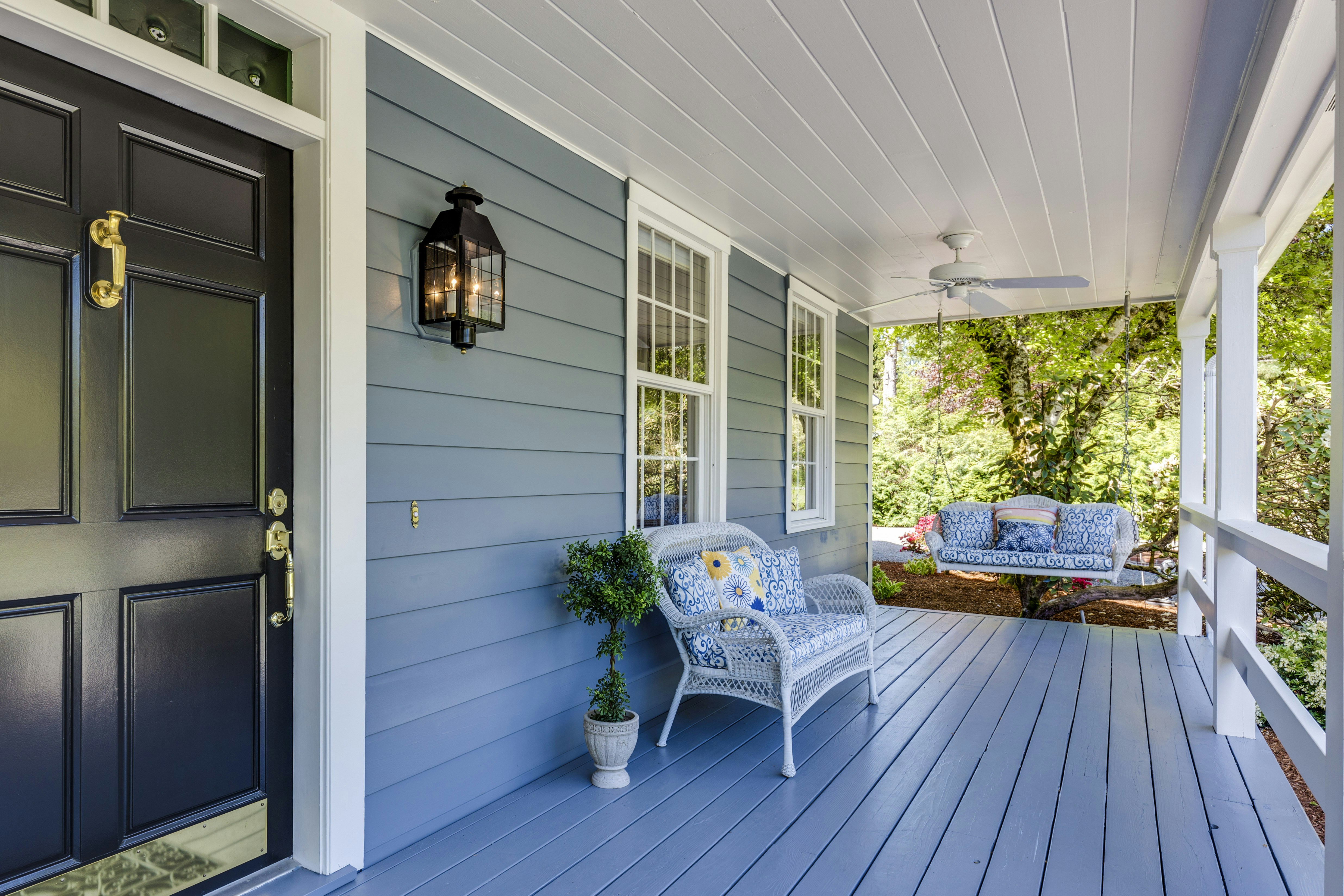
Buying a home is one of the most important financial and personal decisions we can make. Location, layout, natural light or the feeling a property gives during a viewing are important aspects, but they should not be the only ones we take into account.
Before signing a transaction, it is advisable to review the property's documentation, its land registry status, the condition of the building and certain aspects that may affect both the use of the home and future expenses.
Read moreRead less
A good purchasing decision begins long before arriving at the notary's office. Properly analysing the property allows us to better understand what we are buying and reduce the risk of later encountering expenses, limitations or situations that we had not anticipated.
1. The property's land registry status
One of the first aspects to check is who appears as the owner of the property and whether there are any registered charges affecting it.
Situations that may appear include mortgages, seizures, easements, usufructs or other limitations that may affect ownership.
The land registry extract provides relevant information about the ownership and certain registered charges affecting the property.
This does not necessarily mean that a property with a mortgage cannot be sold. It is a common situation. The most important thing is to understand the situation and establish correctly how it will be cancelled or managed within the transaction.
2. The property's documentation
In addition to land registry information, it is advisable to check that the home has the documentation required for the transaction.
Depending on the property and the applicable regulations, documents such as the following may be relevant:
1) The certificate of occupancy.
2) The energy performance certificate.
3) The cadastral reference.
4) The land registry details of the property.
5) Certain technical documentation for the building, where applicable.
Reviewing these documents before moving forward helps to avoid issues when the transaction is already at a more advanced stage.
3. The homeowners' association
When we buy an apartment, we do not only acquire the interior space of the home. We also become part of a homeowners' association and of a building with its own expenses, maintenance and collective decisions.
For this reason, it is advisable to know issues such as:
1) The amount of the regular community fees.
2) Whether there are approved or expected extraordinary contributions.
3) The general condition of the building.
4) Recently completed works.
5) Works that may be pending.
6) The general financial situation of the community.
A home may be in good condition inside and yet form part of a building that will soon require major work on the façade, roof, lift, installations or other communal elements.
4. The real condition of the home
The photographs in a listing provide a first impression, but during a visit it is advisable to analyse the home in more detail.
It is advisable to observe the condition of the installations, windows, possible damp, ventilation, insulation, layout, electrical system, plumbing and general conservation.
In older homes, it can also be useful to know what renovations have been carried out and whether certain elements correspond to the property's original configuration.
Not all defects have the same importance. Painting a wall does not have the same impact as renewing a complete electrical installation or solving a structural or damp problem.
5. The building also matters
Especially in cities such as Barcelona, where the residential stock includes buildings from very different periods, understanding the building is essential.
The age of the building, the condition of the communal areas, the existence of a lift, the maintenance carried out and any inspections or pending works may influence both the daily use of the home and future expenses.
A home should always be analysed together with the building of which it forms part.
6. The property's surroundings
The surroundings are also part of the purchase.
Before making a decision, it can be useful to visit the area at different times of the day and assess aspects such as noise, mobility, public transport, shops, services, the orientation of the property or the day-to-day functioning of the street.
The same neighbourhood can change significantly from one street to another, and even between different sections of the same street.
That is why understanding the real surroundings is especially important when the buyer does not know the area well.
7. The costs associated with the purchase
The advertised price of a home does not represent the total cost of the transaction.
In addition to the purchase price, the buyer must take into account the corresponding taxes, notary and land registry fees, financing if there is a mortgage, and other possible costs related to the transaction.
Preparing a complete budget in advance makes it possible to know the total amount required and avoids making decisions based solely on the price of the property.
8. Do not rely only on the first impression
It is normal for a home to create an immediate impression. Natural light, a terrace, a patio, views or a particular layout may make us quickly connect with the property.
That feeling is important because a home must also appeal to us, but the final decision should combine two dimensions: the emotional side and the technical side.
A good purchase is not only about finding an attractive home. It is also about correctly understanding what we are buying.
Before signing, it is advisable to ask questions
Many doubts can arise during a real estate transaction. Asking before signing is always preferable to later discovering a situation that could have been clarified from the beginning.
Documentation, homeowners' association, condition of the building, charges, renovations, expenses and characteristics of the surroundings are some of the issues that should be clear.
At InModerna GSI, we support buyers and owners throughout the different stages of a real estate transaction, helping to analyse the property and the necessary documentation in order to make decisions with greater confidence.
Buying a home is an important decision. Having clear information before signing allows you to make it with greater confidence and avoid unpleasant surprises later.
September 16, 2026
THE STORIES HIDDEN BEHIND BARCELONA'S CENTURY-OLD BUILDINGS
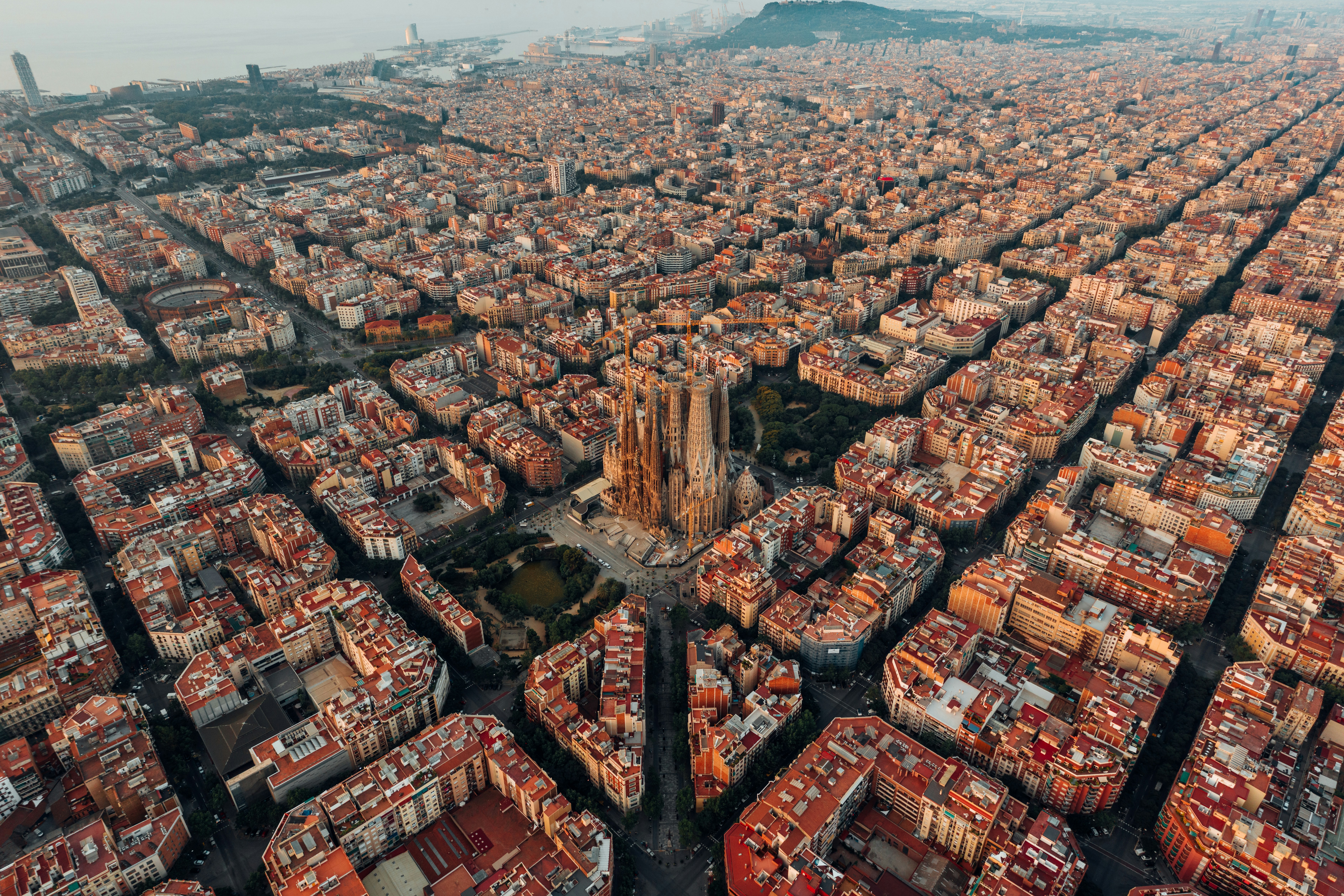
Barcelona can also be understood through its buildings. Behind many façades that form part of the everyday landscape of neighbourhoods such as Gràcia, there are more than one hundred years of history, transformations and different ways of living in the city.
High ceilings, balconies, interior courtyards, wooden carpentry, hydraulic tile floors and traditional structures are some of the elements that can still be found in many old homes in Barcelona.
Read moreRead less
These buildings are not all the same and do not belong to a single period. Barcelona's growth during the nineteenth century and the first decades of the twentieth century left behind a great diversity of residential buildings, from simple constructions linked to the former municipalities of the Barcelona plain to bourgeois estates and modernist buildings.
The Barcelona History Museum explains that, after the 1888 Exhibition, housing construction intensified and different residential typologies coexisted. In former municipalities such as Gràcia, simpler houses were also developed, many with one or two floors, while the city continued to transform.
(Source: Barcelona History Museum)
High ceilings and spaces that speak of another era
One of the features that most attracts attention when entering certain old homes is the height of the ceilings. This proportion completely changes the perception of space and makes it possible to find elements that are highly valued today, such as mouldings, exposed beams or traditional construction solutions.
Over the decades, many homes have been redistributed to adapt to new needs, but some still retain part of that original configuration.
The Catalan vault: a technique that remains part of Barcelona
The Catalan vault, traditionally built with layers of thin brick, forms part of the construction heritage of numerous buildings in the city. In some current renovations it is recovered and left exposed, becoming one of the most characterful elements of the home.
Balconies, galleries and interior courtyards
Before talking about air conditioning or large glass enclosures, architecture already had to solve essential issues such as lighting and ventilation.
Street-facing balconies, rear galleries and interior courtyards helped bring light and air into homes that, in many cases, had deep floor plans and layouts very different from those of today.
Today these spaces continue to play an important role in the experience of living in an old home.
Hydraulic flooring: from everyday element to feature with character
Many hydraulic tile floors that are now considered a distinctive decorative element began as a common solution in homes from the late nineteenth and early twentieth centuries.
Their geometric patterns and colour combinations mean that, when they are preserved in good condition, they can become one of the most recognisable elements of a Barcelona home.
Gràcia: visible history on every street
In Gràcia this diversity is especially easy to perceive. Buildings from different periods coexist with simple estates, houses with patios, modernist constructions and homes that have gone through several generations of renovations.
One notable example is Casa Fuster, located on the border between Passeig de Gràcia and Gran de Gràcia. The building, designed by Lluís Domènech i Montaner, was built between 1908 and 1911 and forms part of the city's architectural heritage.
But Gràcia's value is not found only in its monumental buildings. It is also found in the anonymous buildings that shape its streets and preserve small pieces of the neighbourhood's everyday history.
Renovating without erasing history
An old home may need updated installations, improved insulation, a modified layout or a kitchen and bathrooms adapted to today's needs.
Renovating, however, does not necessarily mean removing everything that existed before. When the condition of the property allows it, preserving certain original elements can help maintain its personality while combining it with contemporary comfort.
Each home requires a different analysis. There are elements worth recovering and others that, for technical, functional or safety reasons, must be renewed.
Understanding the building also means understanding the home
When we visit an apartment, we usually first notice the surface area, layout, natural light or rooms. But in a city like Barcelona, it is also important to understand the building of which it forms part.
Its age, state of conservation, communal areas, interventions carried out and construction features help to better understand the property.
At InModerna GSI, we work every day with homes and buildings in Gràcia and Barcelona. Knowing their features, surroundings and the reality of each building allows us to advise owners and buyers with a vision that goes beyond square metres.
Because behind every home there is a building, and behind many buildings in Barcelona there is more than a century of history.
GRÀCIA, FESTA MAJOR AND THE END OF SUMMER: THE NEIGHBOURHOOD THAT ALWAYS COMES BACK TOGETHER
There are moments of the year that explain a neighbourhood better than any guidebook.
In Gràcia, one of those moments arrives every August, when the streets stop being just streets, the squares fill with conversations and the neighbourhood is transformed with colours, music, lights and decorations that have taken shape over months thanks to the work of neighbours.
The Festa Major de Gràcia is not simply a celebration. It is also a way of remembering what makes this neighbourhood special.
Read moreRead less
For a few days, Gràcia once again shows one of its most recognisable sides: decorated streets, popular activities, concerts, dinners, traditional culture and a street life that is difficult to find with the same intensity elsewhere in Barcelona.
But behind these festive days there is much more: associations, street committees, volunteers and neighbours working for months so that, once again, the neighbourhood can be transformed.
A neighbourhood built by its neighbours
Perhaps this is one of the things that best defines Gràcia.
Although it is part of a large city like Barcelona, the neighbourhood preserves a very distinct identity. Its squares, local shops, organisations, markets, narrow streets and everyday relationships between people keep alive that neighbourhood feeling that many cities have gradually lost.
During the Festa Major, this identity becomes even more visible.
The decorations do not appear overnight. They are the result of months of meetings, ideas, manual work and collaboration. Each street tells a small story and each decoration reflects, in some way, the collective effort of the people who live there.
And perhaps that is the most beautiful part of the festival: seeing how a space we normally use to go to work, buy bread or return home becomes, for a few days, a shared place.
When summer begins to say goodbye
The Festa Major de Gràcia also has something of the end of summer about it.
It arrives at that point in August when the days are still long, Barcelona is still living at another pace and many people slowly begin to return from their holidays.
For a few days, however, it seems as if the calendar stops.
Terraces fill up, the streets regain activity and the nights stretch a little longer. It is almost one last celebration before September returns with routines, schedules, new projects and that familiar feeling of beginning a new stage.
Perhaps that is why the Festa Major also carries a small touch of nostalgia.
It reminds us that summer is ending, but at the same time it brings us back to the neighbourhood, to neighbours, to the usual shops and to that everyday life that is also part of our home.
Gràcia is much more than a location
In the real estate sector we often talk about square metres, orientation, layout, prices or the condition of the building.
These are important factors, of course.
But there is a part of a home's value that is much harder to express with a number: the place where it is located and the life that surrounds it.
Living in Gràcia means going down to shop at local businesses, meeting familiar faces in a square, having small restaurants, markets, schools, workshops and shops just a few minutes from home.
It means walking through streets that still preserve a human scale and, for one week in August, seeing those same streets change completely.
A home is not only what we find behind the front door.
It is also the street, the square, the neighbours and the history of the place where we decide to live.
InModerna is also part of this neighbourhood
For us, Gràcia is not only the area where we work.
It is the neighbourhood where our office is located, where every day we speak with owners, buyers, tenants, shopkeepers and neighbours. It is where we know the streets, the buildings and many of the stories that exist behind each home.
That is why we like our blog not to talk only about prices, regulations or real estate transactions.
We also want to talk about the neighbourhood.
About those things that explain why so many people want to live here and why many of those who have lived in Gràcia for years continue to feel it as a small town within Barcelona.
Until next year
The decorations have already been removed, the streets have gradually regained their usual appearance and September is here.
What remains are the photographs, the conversations, a night or two that went on a little longer than expected and the memory of another Festa Major.
And the neighbourhood continues.
With its shops opening every morning, shutters going up again, squares filling up, neighbours greeting one another and a new season beginning.
From InModerna GSI, we can only say:
thank you, Gràcia, for another summer full of life.
SEASONAL RENTALS AND ROOM RENTALS: WHY IS THE MARKET ENTERING A STAGE OF GREATER CONTROL?
The rental market is changing. In recent years, many owners have looked for alternatives to habitual residence rentals: seasonal contracts, room rentals, stays linked to studies, work, professional relocation, medical treatment or other temporary situations.
This change has not appeared by chance. Demand pressure, rent caps in stressed areas, regulatory uncertainty and the need for greater flexibility have led many properties to be analysed from a more patrimonial perspective.
Read moreRead less
However, the current context no longer allows improvisation. Seasonal rentals and room rentals have entered a stage of greater control, greater justification and greater documentary requirements. For owners, this means that profitability can no longer be analysed separately from legal risk and the real management of the property.
Temporariness does not depend only on duration
A common mistake is to think that a 6, 9 or 11-month contract is automatically a seasonal rental. But the main issue is not only the duration, but the purpose of the contract.
The Urban Leases Act distinguishes between residential leases and leases for uses other than housing.
(Source: BOE - Urban Leases Act)
For a rental to truly be seasonal, it must respond to a specific and coherent temporary cause: studies, fixed-term work, professional relocation, medical care, works in the habitual residence or another temporary need.
Room rentals also require more analysis
Room rentals have become a very common form of rental in cities with high residential demand. For some owners, it may seem like a way to obtain more monthly income, but it also involves more management, more turnover, more coexistence between occupants and more attention to regulatory compliance.
Profitability and risk: two variables that must be analysed together
When an owner decides to rent out a property, it is normal to ask which option may generate more income. But the professional question should not only be “how much can I charge?”, but also “what risk am I taking on and what level of management will I need?”.
Therefore, before deciding, it is advisable to compare scenarios:
1) Estimated monthly income.
2) Duration and stability of occupancy.
3) Risk of non-payment or turnover.
4) Wear and tear of the property.
5) Need for management and follow-up.
6) Applicable regulations.
7) Tenant or occupant profile.
8) Owner's patrimonial objective.
Documentation becomes a key element
In a context of greater regulation, documentation is a central element. Before placing a property on the market, it is advisable to review the property's situation, the certificate of occupancy if applicable, the energy certificate, the condition of the building, the contract terms and the justification for the type of lease.
What strategy may make sense for an owner?
There is no single answer. The decision depends on the type of property, its location, the condition of the apartment, the owner's personal situation and their patrimonial objective.
Conclusion
Seasonal rentals and room rentals are part of today's market, but they can no longer be approached as an improvised solution. The new context requires more judgement, more documentation and a more professional view of each transaction.
At InModerna GSI we help owners study their property from a real estate and patrimonial perspective, assessing the different options: habitual residence rental, seasonal rental, room rental, sale, renovation or preservation of the asset.
If you own an apartment in Barcelona and want to analyse which strategy may best fit your situation, contact InModerna GSI and we will advise you with no obligation.
July 6, 2026
ENERGY EFFICIENCY AND RENOVATIONS: WHY ARE THEY BECOMING INCREASINGLY IMPORTANT WHEN SELLING OR RENTING A HOME?
When an owner thinks about selling or renting a home, the first thing they often consider is the price. But the value of a property does not depend only on square metres, location or the state of the market.
Other factors are becoming increasingly important, such as the state of conservation, natural light, insulation, layout, comfort, energy consumption and the first impression a person receives when visiting the home.
Read moreRead less
In an increasingly demanding real estate market, properly preparing an apartment before selling or renting it can make the difference.
Why is energy efficiency becoming more important?
The European Union has strengthened policies linked to the energy efficiency of buildings in recent years.
(Source: MITECO)
Aspects such as insulation, windows, climate control, ventilation and energy consumption will carry increasing weight in the perceived value of a home.
A better energy rating can convey an idea of lower consumption, greater comfort and better maintenance of the home.
What do buyers and tenants look at today?
1) Natural light.
2) The orientation of the home.
3) The condition of the kitchen and bathroom.
4) The quality of the windows.
5) Thermal and acoustic insulation.
6) The layout of the spaces.
7) The condition of the building and communal areas.
8) Whether immediate renovations are needed.
Renovating before selling: is it always necessary?
Not always. Some owners think that a major renovation is necessary before selling, but it does not always pay off to invest a large amount if it is not recovered in the final price.
In some cases, painting, organising, improving lighting, repairing visible defects or better preparing the home for photographs and viewings may be enough.
At InModerna GSI we understand that each home needs a different strategy. We can advise on whether it is better to sell as it is, make small improvements, study a partial renovation or prepare a visual proposal to show the property's potential.
Contact InModerna GSI and we will advise you with no obligation.
July 1, 2026
THE GOVERNMENT IS PREPARING NEW CHANGES TO RENTAL REGULATIONS: WHAT COULD HAPPEN TO THE URBAN LEASES ACT?
The rental market is once again at the centre of political and legal debate. After months of regulatory uncertainty, the Government has announced the preparation of a new package of housing measures.
For owners and tenants, this situation raises a very clear question: what could actually change and how could it affect rental contracts?
Read moreRead less
Before going into detail, it is important to clarify that not all the announced measures have been definitively approved.
What does the Urban Leases Act currently regulate?
The Government approved Royal Decree-Law 8/2026, of March 20.
(Source: BOE)
This decree was not ratified by Congress and was repealed.
(Source: BOE - repeal)
What is the Government preparing now?
Among the announced measures are possible changes regarding extensions, rent updates, seasonal contracts, room rentals and documentary obligations.
Why is this important for owners?
Any change in regulations may affect the way a home is managed. Before renting out an apartment, it is advisable to be clear about what type of contract truly fits the transaction.
What do we recommend at InModerna GSI?
In this scenario, our main recommendation is to act prudently and not make decisions based only on headlines.
Contact InModerna GSI and we will help you study your case.
June 25, 2026
HOUSING PRICES CONTINUE TO RISE: WHAT DOES THIS MEAN FOR OWNERS IN BARCELONA?
The real estate market continues to show strong activity in Spain, Catalonia and especially Barcelona.
At a time when housing prices continue to rise, many owners are asking a very common question: is this a good time to value my apartment?
Read moreRead less
The answer is yes. Not necessarily because you need to sell immediately, but because knowing the real value of a home allows you to make decisions with greater confidence.
According to the National Statistics Institute, the Housing Price Index in Spain recorded a year-on-year increase of 12.9% during the first quarter of 2026.
(Source: INE)
In the city of Barcelona, asking-price data published by Idealista placed the average price of homes for sale at €5,243/m² in May 2026.
(Source: Idealista - Barcelona)
Listing a property above its real value can cause the listing to lose strength. Conversely, setting the price too low can mean missing an economic opportunity.
An online valuation can provide guidance, but it is not always enough
The price of an apartment depends on its exact location, condition, light, layout, floor level, lift, building, demand and comparable properties.
Gràcia: a neighbourhood where every street matters
Valuing an apartment in Gràcia requires local knowledge. Two homes of similar size can have very different values depending on their location and characteristics.
At InModerna GSI we help you value your home
If you own an apartment in Gràcia or Barcelona and want to know how much it may be worth, we can advise you with no obligation.
Contact InModerna GSI and request a professional valuation of your home.
November 21, 2020
FROM TOURISM-PHOBIA TO NOSTALGIA
Covid has changed our lives in an extreme way.
They say that from now on everything will be different. Allow me to have my doubts.
Read moreRead less
Now that we are without tourism, we have realised that tourism was truly necessary for the city of Barcelona.
(link)
But, as the saying goes, not too much and not too little. That type of uncontrolled growth, without proper planning of the kind of tourism we wanted, was not good for the city.
So, focusing on our sector, real estate, it has been one of the most affected in the city.
On the one hand, rentals.
1) Covid.
2) The new Generalitat regulation on stressed areas.
The wheel will slowly start turning again. The multiplier effect of tourism will begin to bear fruit.
Sales: although property transactions have fallen, prices remain relatively stable.
In short, the market will gradually recover in the medium term.
José Cazorla - InModerna GSI
January 12, 2024
PRICE CONTROL IN CATALONIA COMES INTO FORCE IN FEBRUARY
At InModerna GSI, we would summarise the entry into force of this regulation as follows: the State neglecting its constitutional obligation to provide decent and affordable housing, placing the burden of the problem on small property owners.
Read moreRead less
It is not fair that small savers, who have invested in their future and in a supplement for their retirement, should put their property at risk, exposing it to still uncontrolled inflation, extremely high interest rates and now rent limitation.
Those owners who cannot afford it will decide to sell, removing homes from the rental market.
International investors will stop investing in Spain due to the lack of legal certainty and profitability.
We do not understand why a regulation like this is being applied again for a second time, especially when it has already been shown not to work.
If you would like more information, we leave you a link:
The slow decline in interest rates is finally beginning. The CPI is starting to moderate, close to 3.2% year-on-year in November, with the annual core CPI rate at 4.5%.
Read moreRead less
Growth forecasts for Spain in 2024 are only 1.6%, while Germany is expected to remain at 0.6%.
Today, Euribor stands at 3.60%. Just a few weeks ago it was at 4.12%.
At InModerna GSI, we believe that if the ECB lowers rates, we will see a sharper fall in interest rates. But we must remember that these are all forecasts.
Our recommendation is to negotiate a novation, that is, to renegotiate the terms with your bank. Otherwise, we recommend going to a mortgage broker to study other options.
We lean towards the mixed-rate formula: a fixed first year and then variable, seeking to take advantage of a possible subsequent fall in rates.
José Cazorla - InModerna GSI
Recent posts
INMODERNA GSI TAKES PART IN THE API BAIX LLOBREGAT MEETING
WHAT INFORMATION SHOULD BE REVIEWED BEFORE BUYING A HOME?
THE STORIES HIDDEN BEHIND BARCELONA'S CENTURY-OLD BUILDINGS
GRÀCIA, FESTA MAJOR AND THE END OF SUMMER
SEASONAL RENTALS AND ROOM RENTALS
ENERGY EFFICIENCY AND RENOVATIONS
THE GOVERNMENT IS PREPARING NEW CHANGES TO RENTAL REGULATIONS